The old rules were written for content on screens, not for something that talks back.
Screen time rules made sense. This doesn't.
Your kid is going to use AI for homework — probably already has. It talks back, it's endlessly patient, it never tells them to go outside, and it's confidently wrong in ways they can't catch.
Here's the problem with the playbook we've got. Every parental control ever shipped was built to filter content: block the bad stuff, cap the hours, approve the app. What's happening now isn't a content problem. It's a relationship problem, and there's no setting for that.
Then we get into the three questions nobody has a clean answer to:
-
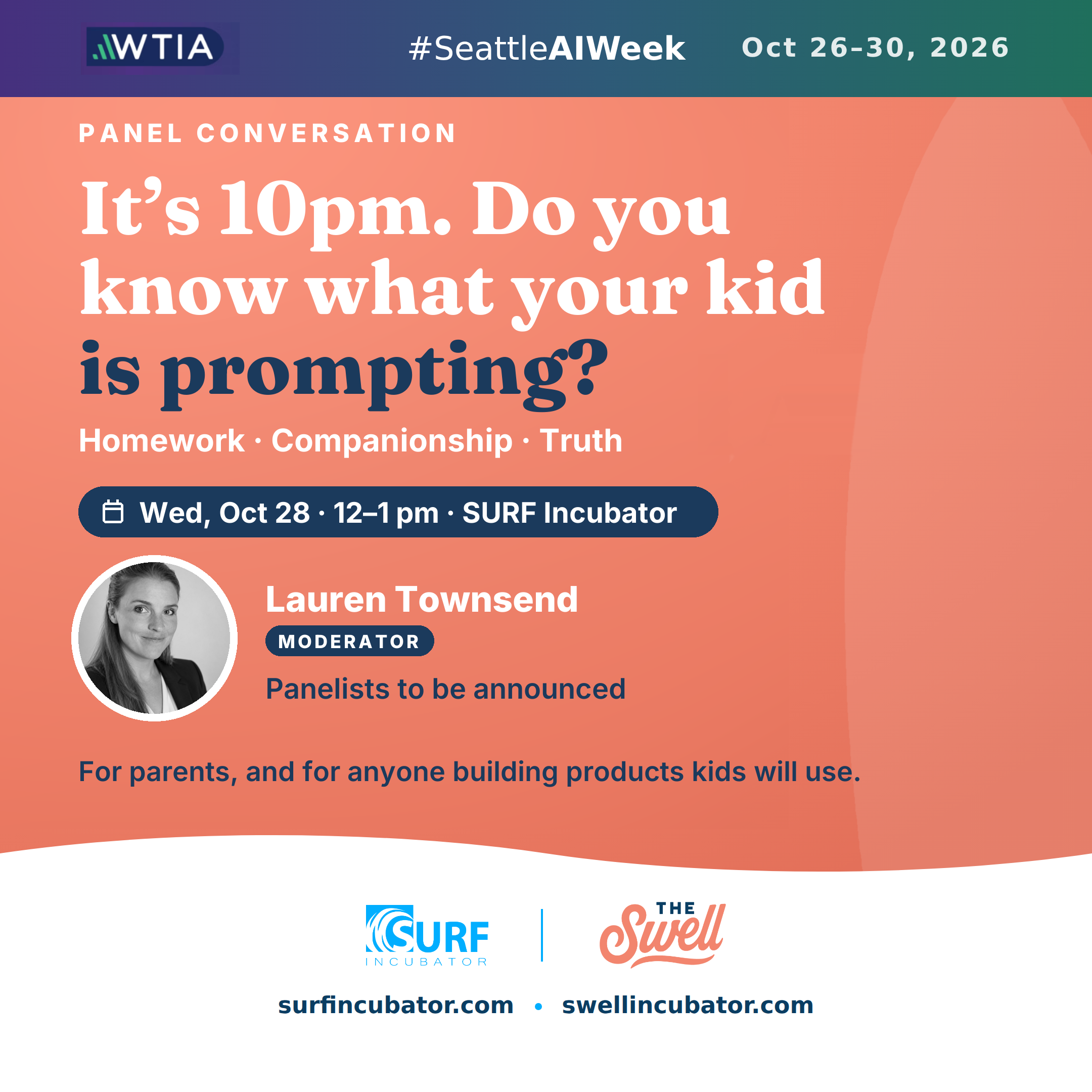
Homework — where's the line between a tutor and a ghostwriter, and can a school even enforce it?
-
Companionship — what do you do when a bot is nicer to your kid than fourth grade is?
-
Truth — how do you teach someone to doubt a thing that never sounds unsure?
You'll leave with a way to think about this new wave of tech that isn't "limit screen time," and the mild relief of hearing that the people who built this stuff haven't got it figured out either.
No fear-mongering, no vendor pitch. Bring your hardest question — the ones without clean answers are the ones we want.
For parents, and for anyone building products that kids will end up using anyway.
Panelists to be announced.
About your moderator
Lauren Townsend runs Townsend AI Studio in Seattle, where she advises and builds for small companies getting real value out of AI. At Amazon, she built products that help parents manage their kids' experience with technology. She holds an MBA from The Wharton School.
Part of Women Shaping AI at SURF x SWELL, the Wednesday of #SeattleAIWeek.