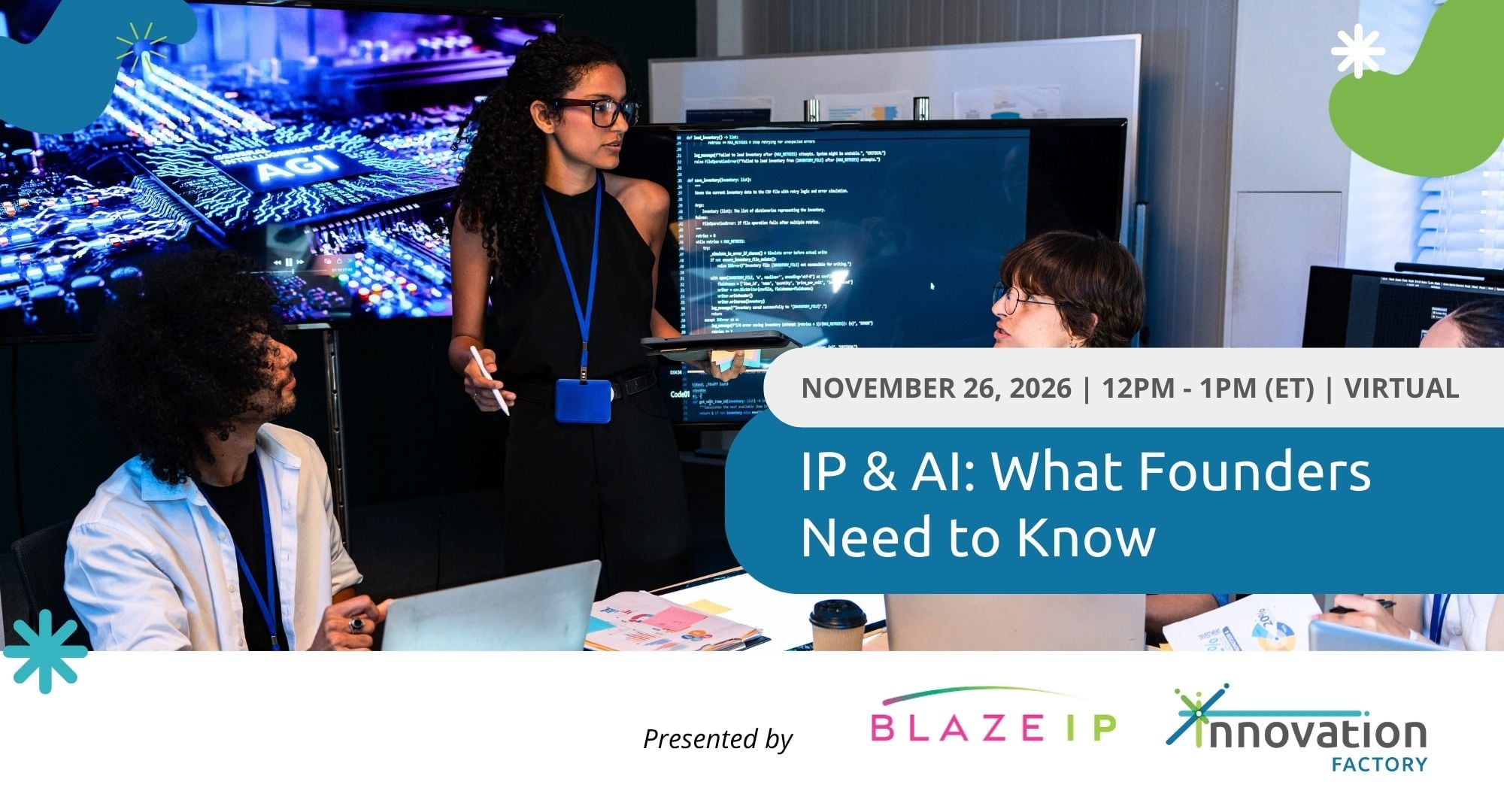
You are likely using AI to write code, draft marketing content, and develop new ideas for your business. But who actually owns what comes out of it? As artificial intelligence tools become deeply integrated into daily operations, founders and innovators are facing unprecedented legal questions around intellectual property law and AI ownership. Generative tools offer incredible efficiency, but without a clear understanding of rights and obligations, startups risk compromising their proprietary assets and long-term valuation. Join us for a practical, no-fluff legal session where Michele Ballagh, lawyer and trademark agent at Blaze IP, breaks down where Canadian intellectual property law stands on AI right now. This interactive session focuses on helping founders identify high-risk areas, safeguard trade secrets, and maintain control over their innovations. You will leave equipped with actionable insights to protect your business assets as technology and legal standards rapidly evolve. What you’ll learn In this comprehensive online session, you will gain immediate clarity on the legal implications of using AI in your business operations. Key takeaways include: Navigating AI ownership and copyright: Understand whether you truly own AI-generated work, why entering a simple prompt alone does not create copyright protection, and how human intervention, editing, and thorough documentation can strengthen your legal ownership claims. Evaluating AI-assisted patent eligibility: Learn whether AI-assisted inventions can be patented in Canada, discover who legally qualifies as an inventor, and explore why Canadian patent regulations for AI tools are stricter than those in the US and EU. Mitigating IP and disclosure risks: Discover how inputting sensitive code, confidential ideas, or technical disclosures into public AI platforms could legally count as public disclosure, and learn what specific clauses to check in a platform’s terms of service before uploading proprietary data. Protecting data assets and privacy: Gain practical guidelines regarding data ownership, confidentiality agreements, trade secret protection, and legal privacy obligations when your business model relies on proprietary datasets. Anticipating upcoming legal shifts: Stay ahead of key federal consultations, policy shifts, and emerging legal precedents that will redefine Canadian copyright and patent laws in the near future. For startups scaling in competitive markets, intellectual property is often the most valuable asset on the balance sheet. Misunderstanding how AI tools impact copyright, patent rights, or trade secrets can undermine investor confidence and jeopardize future funding rounds. By understanding how to properly document human involvement and manage data input, founders can protect their innovations while continuing to leverage modern tech. Innovation Factory offers these targeted education sessions to give regional entrepreneurs the legal foundation and strategic clarity needed to scale safely and confidently. Who should attend This session is designed for forward-thinking innovators who want to protect their intellectual property while using modern tech tools: Early-stage founders, co-founders, and entrepreneurs actively incorporating AI tools into product development or business workflows. Tech leaders, software developers, and product managers managing source code and technical documentation. Business owners looking to protect their proprietary data, brand, and long-term company valuation. Meet the speaker Michele Ballagh, Principal Lawyer and Trademark Agent, Blaze IP Michele Ballagh brings decades of legal expertise specializing in intellectual property, trademarks, and technological innovation. As the founder of Blaze IP, she works closely with entrepreneurs, businesses, and creators to protect their inventions, brands, and proprietary ideas. Michele is passionate about demystifying complex legal concepts and helping business leaders navigate the changing intersection of law and technology. Accessibility and accommodation requests This event will be delivered virtually via Zoom with Closed Captioning (CC) available. If you require additional accommodations, please contact [email protected].
Full text on the host's site
.