Hydrogen is having a renaissance in places most people wouldn’t expect: small drones that stay aloft for hours, field generators for the remote outposts, and spacecraft power applications. Data centers, hunting for reliable power as AI demand climbs, are running trials of their own.
These early adopters aren’t waiting for hydrogen to get cheap. For their missions, hydrogen offers what batteries and diesel can’t easily match: longer flight endurance, cleaner energy production, and fuel that can be made on site instead of trucked in. So what can they teach the rest of the energy economy?
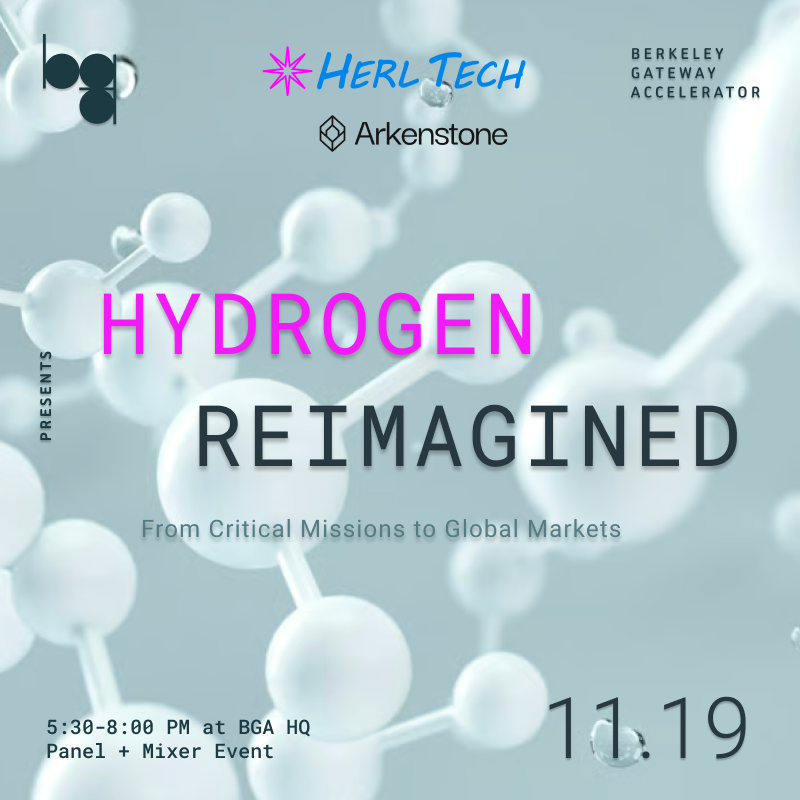
Hydrogen, Reimagined: From Critical Missions to Global Markets brings together researchers, industry leaders, founders, and investors for a moderated conversation on:
-
How hydrogen is made, stored, and moved, and why that shapes who can use it
-
Why defense, space, and data centers are among the first to try it
-
What has to break, or be built, for hydrogen to reach everyone else
-
How to make hydrogen cheap for all
Meet the Panel
Adam Z. Weber, Ph.D. – Senior Scientist, Lawrence Berkeley National LaboratoryLeads Berkeley Lab’s hydrogen and fuel cell research. He co-directs the DOE’s Million Mile Fuel Cell Truck Consortium and is CTO of ARCHES, California’s hydrogen hub. Adam brings the science of what still needs to be built: the fuel cells, electrolyzers, and materials that decide whether hydrogen can scale.
Yinon Eliaz – CEO, Horizon Hydrogen Power Inc.Leads Horizon’s North American push into hydrogen fuel cell power for data centers. He was previously VP of Strategy at EdgeCloudLink, which builds off-grid, hydrogen-powered data centers. Yinon has spent years deploying hydrogen in data centers, one of the early-adopter markets this panel is about.
Michael McNeely, Ph.D. – President & CEO, Herl TechSerial inventor with 40+ patents and three companies founded. He is now developing HERL™, which uses atomic energy instead of conventional electrolysis to split water into hydrogen. Michael speaks to the cost question: what a new way of making hydrogen could do for price.
Ryan D. Taylor – Innovation Navigator, Bakar Labs for Energy & MaterialsSupports early-stage energy and materials startups at UC Berkeley. He was previously a climate investor at Azolla Ventures and worked in power project finance at Enel Green Power. Ryan brings the investor’s view of which hydrogen technologies can attract capital and which still can’t.
Moderated by Sophia S. – Materials Science & Engineering, UC BerkeleyVice President of the Materials Science and Engineering Association. Hydrogen’s hardest problems, like membranes, catalysts, and storage, are materials problems, and Sophia comes from the field that will need to solve them.
Agenda
-
5:30–6:15pm Doors open and networking
-
6:15–6:30pm Welcome, BGA + Herl Tech introduction
-
6:30–7:15pm Panel discussion
-
7:15–7:30pm Audience Q&A
-
7:30–8pm Networking
For founders, investors, engineers, researchers, and anyone working on energy, defense, space, or deep tech.
Hosted by Berkeley Gateway Accelerator in partnership with Herl Tech.